Our world is steadily moving towards a clean, green future. Through the use of efficient renewable energy sources, we aim to meet the demands of the future. However, we are not yet there. The world needs to develop to accomodate an increased capacity in energy storage, not mentioning a necessity in an increase in renewable energy production.
This the goal of Sylene Energy: to provide consulting services for aspiring energy startups or already established companies. We are dedicated to helping our clients propel our precious world into a clean future.



According to the United Nations, renewable energy is energy derived from natural sources that are replenished at a higher rate than is consumed. Common forms of renewable energy include solar, wind, hydro, geothermal, bioenergy, and biomass. The machine behind almost any energy production is the generator. Simply put, a generator converts mechanical energy to electrical energy.
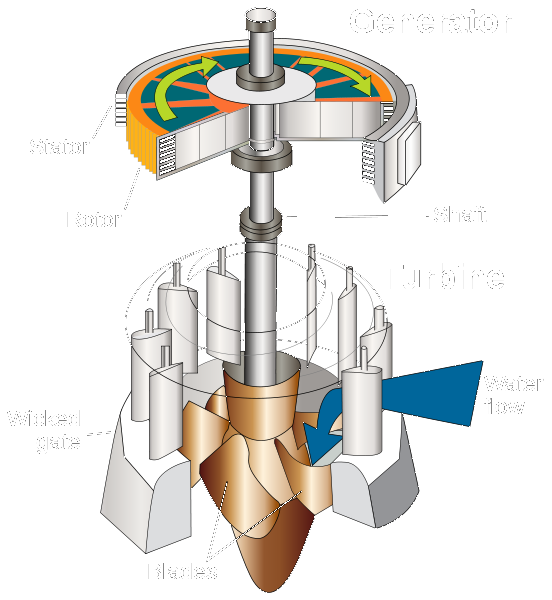
Often, steam is generated through various means to spin a turbine. In the diagram shown from the US Army Corps of Engineers, a water turbine is shown. A flow of water would spin a shaft which would generate electricity. Sometimes, an unorthodox method is used to generate electricity. Solar panels work by absorbing sunlight, energizing electrons and creating a current. Then, metal plates and wires capture the flow of electrons, also known as electricty (Energy Sage).
No matter the method, renewable energy sources have zero or minimal carbon emissions, making them the future of our world.
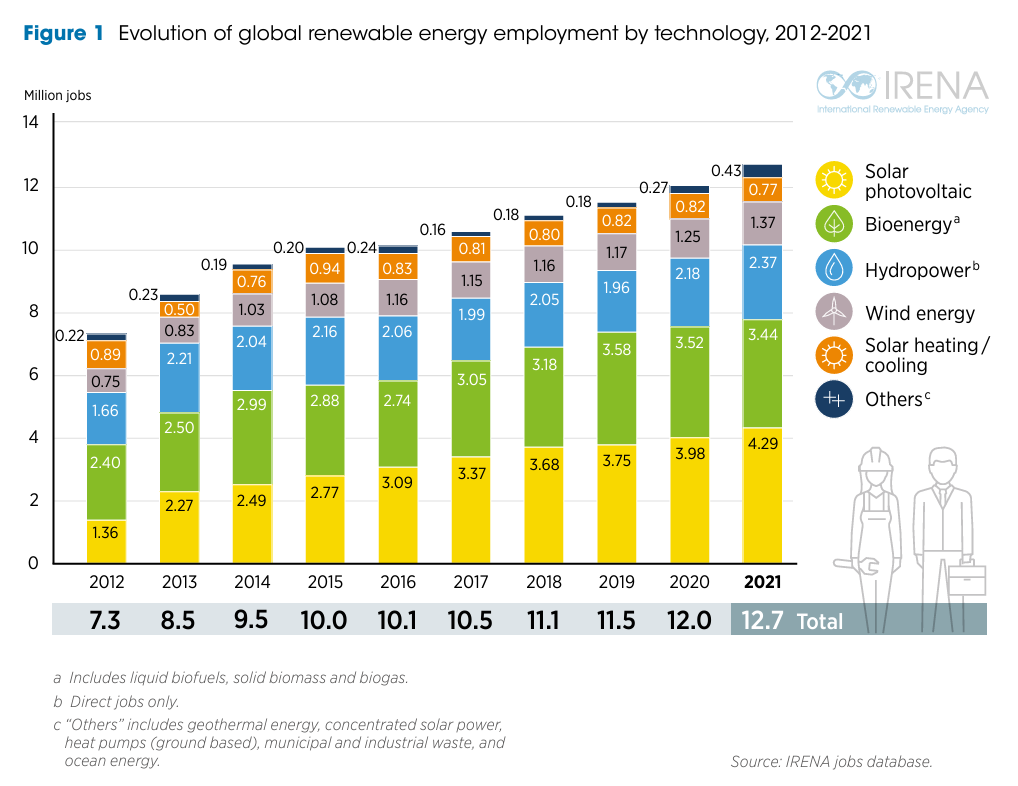
Although difficult for the short term implications for the energy industry, the removal of fossil fuels are simply a small price to pay for humanity in the long run. However, there are many benefits to using renewable energy sources. Besides the obvious benefits of reducing carbon emissions, promoting renewable energy can benefit the economy, as new jobs are created.
Data from IRENA below shows the increasing trend in jobs available in the global renewable energy industry. Finally, renewable energy promises a healthier Earth for us and future generations. In 2018 the burning of fossil fuels caused air pollution in the form of fine particulates which costed $2.9 trillion in health and economic costs (UN).